Friday, 30 January 2015

Choice of Editing Software

In order to make our film, we have to use editing software that would trim out all unnecessary shots, maintain  continuity and allow the film to flow. Also, we need to include credits and insert a visual effects. We were given a choice between two different programs to edit our footage and had to come to a final decision. We based our decision judging on both program's capabilities and limitations.


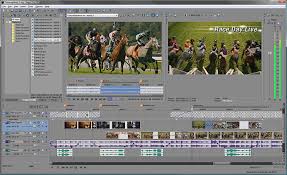
Sony Vegas Pro

The above picture is the user interface for Sony Vegas Pro. As you can see, there are many features you can use to edit your footage. Even though it provides some features some other editing softwares can not, we are quite unfamiliar with this software and has a lot of unnecessary tools which is not needed for editing our film. It focuses more of its attention on visual effect rather than movie editing tools such as precision trimming which will restrict us in our project.

iMovie


The above picture is the user interface for Sony Vegas Pro. As you can see, there are slightly fewer feeatures compared to Sony Vegas Pro. We are both very familiar with this program after have done projects using it before. Most of the functions will be needed to edit our film as the program focuses on video manipulation. We really like how user-friendly the program is due to there also being manuals for tools that are not found in other software.


In the end we decided to use iMovie just because of our familiarity with the program and its relevance to our project.

Tuesday, 27 January 2015

Equipment at Our Disposal

It was important to prepare prior to production because being ready beforehand reduces the likelihood of mistakes being made. An area we focused on was which equipment we would use for the production of our film. The purpose of this process it to use the functionalities of the correct equipment correctly and know when to utilise them. We began by becoming familiar with which pieces of equipment we have at disposal when filming. This is because it will save time and hassle. From our past experience from AS Media Studies, there were times where we didn't have the appropriate equipment at the time was necessary thus making us having to go back to the media room to get the equipment. The detrimental disadvantage of this is wasting a lot of time which frustrates the actors and causes a lot of inconveniences. 

Our priority was having the camera on us at all times as it is the piece of technology used for filming. We had two choices we could choose from: Canon 7D or JVC HD Everio. We opted to film with the JVC HD Everio because of its impressing specs.

Along with the camera, it was important to bring along a spare camera battery just in case we wanted to shoot any extra footage or if we hadn't charged our main battery the whole day.

We used a tripod because we wanted some of our shots to be stationery and not to pan. This would allow to keep the shots on screen stable and clear for the audience to see. The tripod we used was called Sony VCT-R640.

The advantages of the tripod benefited us as it meant we were allowed to film without holding the camera. If we were to film handheld, the film would have looked very shaky and not help making a fast flowing film which maintains continuity. However, we realised that there were some camera shots that needed to be recorded while handheld. Fortunately, most editing software have automatic stability correction functionality that will reduce the amount of shaking on-screen. 


Image result for rode mic

An important aspect of our film was audio, especially dialogue. To ensure that voice and background sound was good, we had to acquire a high quality microphone. We had the option between 'Rode' and 'Zoom H2 Handy Recorder'. We chose to use the Rode because unlike the Zoom H2, it has a microphone jack that can be plugged into the camera and record sound during filming. The quality is very crisp and produced excellent results.


Getting Familiar With the Equipment

There was many pieces of equipment provided to us that we could utilise in the production of our film. We took time to assess what all the equipment can do, how to function them and their pros and cons. The shoulder rig caught our attention, so we decided to test that out when we were given permission to roam around the school and test out the equipment.

What we wanted to take out from this experience was to get grips with how we can use this equipment with full effect. We found the camera, JVC Everio, quite cool. It displayed everything in great quality. It was very easy to get used to. We attached it to the shoulder rig and experimented how we can use it to our advantage. We did not have much luck with it as it limited us to only a few different shot types although it was very easy to manoeuvre.

We eventually realised that the shoulder rig wasn't the best of choices we were given so we decided just to film outdoors with the camera handheld. We practised a few shots such as a wide shot of the school, an over the shoulder shot of two of our actors having a conversation and a close up. We had much more success using the camera handheld rather than the shoulder rig but it wasn't stable when watching it on screen as it was sensitive to movement. More stability was required, so we decided that using a tripod will be much more useful for our project.


We needed to research online about how to maintain great quality image when the camera is stationery. Using http://photo.net/canon-eos-digital-camera-forum/ , we learned that the common rule is to use a shutter speed equivalent (or higher) to the focal length i.e. 1/200 sec for a 200mm lens. This is because the higher the shutter speed, the less chance of camera-shake.

Saturday, 24 January 2015

Choice of Actors

Now that we know about the characteristics characters in the film, it was now necessary to pick actors to play these roles. When looking for actors in our film, our main priority was a person's quality of acting. Additionally, we needed someone who is used to the process or production because we want someone who would be familiar with how production works so being efficient would be essential. Because we attend a sixth-form, there are a huge catalogue of people we personally know who will be willing to act. We identified that there were a handful of people who had similar free periods to us so now it was just about choosing people who have had acting experience and will be committed to our project.


For the role of the student, we decided to hire a close friend of ours named Jamil. He has some minor acting experience before as he has his own projects on YouTube. However, he does have a tendency to get distracted and mess around but we're sure we can contain this by maintaining professional attitudes.


For the role of the teacher, we decided to hire Timur. In our opinion, he suits perfectly to the role of the teacher because he matches the criteria. He has a very alarming posture which would indicate that he is a no-nonsense type of person. He also looks older than he really is which will make it easier for the audience to recognise him as being a teacher. He also has a strong Russian accent which is useful to us as he does project his voice well. This will be very good when recording dialogue.


For the role of the friend, Samuel has volunteered. Him and Jamil are both Ethiopian and are friends in real life so it will allow the audience to recognise that they are friends in the film. Additionally, Samuel aspires to work in the TV industry when he's older. Because he has done many projects before, he is familiar with the processes of production and can share his knowledge with the other actors on set.

Characters

Our film has three characters with significant roles. The requirements for our film to be a thriller is to be very suspense and action-packed yet detailed and well-planned. In which case, we wanted to emphasise the significance of the plot of the story; and with only having five minutes, we thought that reinforcing our intentions can be done by only including three significant characters in the film.

The Student
The Student is the first character. Some may argue that he is the protagonist but we want our audience to make their own decisions on this. Despite this, he is the driving force for the progression of the story line. He is involved in getting trouble with his teacher and accidentally killing him but results in his teacher mysteriously coming back alive and getting revenge on him. His characteristic is him being a teen-aged male with a very negative attitude.

The Teacher
The Teacher has the role of calling in the student for the detention where he is accidentally killed but mysteriously comes back to get his revenge on the student. No-one really knows if he dies or not and how he returns. This adds suspense to the film as it leaves open-ended questions being raised by the audience. The characteristics of this teacher must be very formal with a projecting voice and an assertive attitude.

The Friend
The Friend has the role of being the friend of the student. He is involved in the story when the student tries to break into the school's CCTV room and him helping him. However, they eventually fall into a lengthy dispute which results in the friend knocking out the student. Shortly after, he is also killed by the teacher. Out of all the three characters, this is the least significant role. The characteristic he will have is a supportive and friendly person but does like to confront other has a short temper.

Friday, 23 January 2015

Locations: Scouting and Choices

Subsequent to all of our story and narrative planning, it was now time for planning the actual production of our film. This is quite an exciting phase of our whole production because we can precisely choose what aspects and features we could include in our film.


The film will begin with Jamil on his way to school on a bus. We decided to shoot this at the 38 bus stop in Victoria Station. This would be most convenient because it is the first bus stop in the route and boarding on the first bus stop means that there will not be anyone else on  the bus, giving us a perfect opportunity to shoot the introduction.


The second scene is when the student encounters the teacher and eventually accidental kills him. For this we don't really need a very demanding location because of the scene's focus on the actual content. We decided that a narrow corridor in the school which isn't busy would be appropriate. The corridor we chose is effective because there are lights at the top and we can shoot a variety of camera angles here.


The third scene is when the student goes into the CCTV room to remove evidence of the murder which ends up in the student being knocked out by his friend. Fortunately, our school has their own CCTV security room and we can use this to make it feel very realistic.


The last scene would be the death of the student and the teacher having his revenge. The locations for this would be by the exit of the school. Before this point in the film, most of the film would be filmed in doors. We want this scene to be outside as it will provide a vibrant atmosphere. The effect this would have on the scene is making the outside look bigger and making Jamil look more vulnerable.

Monday, 19 January 2015

Film Storyboard


Film Synopsis

A student (Jamil) is on the bus, on his way to a Saturday detention. He enters the isolated school with only his teacher (Mr Romanov) in the premises. As they are slowly approach the detention room, Mr Romanov aggravates Jamil by telling him how much trouble he has caused him. Jamil reacts to this angrily and trips up the Mr Romanov down the staircase. He dies without the Jamil initially realising. When Jamil realised that he killed Mr Romanov, he looks around and notices a camera which had recorded what happened. Jamil then hides the body and decides to remove the CCTV footage..


Jamil goes to the CCTV room but finds out it is locked. He phones his friend (David) and tells him to bring tools without hesitation. When David arrives, they use the tools to break into the CCTV room. Jamil goes on the central computer and removes the evidence of the murder. In the process, Jamil tells David about he has killed Mr Romanov but with brief detail. David gets very annoyed on why Jamil is being secretive. They eventually have a fight and results in Jamil being knocked out.


When Jamil wakes up, he intends to leave the school. As he approaches the exit, he notices Mr Romanov storm past. Jamil is perplexed because he saw him dead. He runs after him to check if it was just an allusion but all the school exits had magically closed. When he turns around, he sees the embodiment of Mr Romanov and thinks it is not real. Mr Romanov grabs him and whispers in his ear "I told you, I'm always here".

Friday, 16 January 2015

Brainstorming Story Plots

Now that we had decided which our genre and theme, it was now necessary to brainstorm story plots for our film. As suggested in a previous post, we initially began suggesting quite far-fetched ideas for our film but couldn't use them due to our constraints and its effectiveness. 

Since then, our theory lessons we have had in class proved to be very useful as we considered many narrative theories and audience theories when drafting some ideas for story plots. However, coming up with fresh and brand new ideas for story plots was monotonous because all our suggestion seemed liked they have been done before and can easily be associated with another film. For example, our previous example about a police officer having special abilities is quite similar to a film named Limitless. Eventually, we did make a breakthrough. 


We briefly touched upon what kind of locations to use and thought it would be sensible to film in school as its the most accessible place we have which is very convenient. One thought created another and we ended up coming with the idea to base a story around a student and a teacher. Then when considering the theme, revenge, we thought that the film could be about a teacher seeking revenge against his student after the distress he has given him. This seemed quite enthralling so we drafted out specific details of this and mapped out the plot. 


Our next post will be the film synopsis we came up with.

Research Into Similar Films

The Cabin in the Woods
CitwTeaserSmall.jpg

Pros:
Wide range of camera angles
Exclusive sound tracks and vivid sound effects
Great visual quality
Conventional narrative structure

Cons:
Conversations are too long
Ending was not fluent

Similarities (with our film):
Same hybrid genre (Thriller/Horror)
Focusing on using wide variety of camera angles
The idea of the supernatural


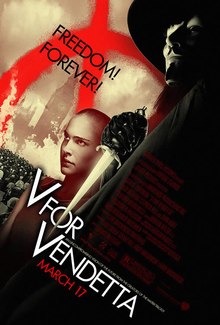
V for Vendetta
Vforvendettamov.jpg

Pros:
Very intense story
Focus on character development with great acting
Really nice props and costume
Conforming to conventions of thriller

Cons:
Audience can be confused with the sub-plot
Conversations are very long and boring
Restricted target audience due to focus on political ideas

Similarities (with our film):
Protagonists wear hoods/hats to show they don't want to be seen
Set in urban London
Inclusion of action compilations

Exploring Themes and Final Decision

We have completed brainstorming ideas about which genre to use for our film and concluded that the most suitable option would be to do a thriller. With this in mind, we now had to come up with ideas regarding story and the actual contents of the five minute film. We began by choosing which theme our film should be based around. To help us, we used a website called TheScriptLab (http://thescriptlab.com/) to see the most popular central themes of films. These ranged from murder, revenge, mystery etc. 


We decided that a theme we should base our film around should be revenge because both of us made our AS pieces based around revenge and we know which conventions worked well and which didn't hence allowing us to address our mistakes to create a new and high quality film.

Final Decision: Revenge

Thursday, 15 January 2015

Conventions of Thriller Genre


Our Film Genre

We researched films on YouTube to give us some inspiration and stimulate the expressive ideas in our minds and getting them down on paper. We did a lot of research and discussed about our foundings. We commented on which films were the best due to their genres and extrapolated their according conventions which would help to portray our film.


A thriller/action genre seemed to be the best to do and most suitable to us. We came up with this idea because most mainstream thriller films are targeted at teenagers like us so we are familiar with most of its conventions. Also, picking thriller as our genre open up many options for film ideas as we can be creative in what we want to show on screen. With this in mind, it would also match our versatile approach to production because it will compliment the action side of thriller. We also considered just to have a genre of action but it seemed unlikely after careful consideration due to the fact that it would require very good actors.

Final Decision: Thriller

Researching Film Genre

The purpose of this research task was to watch some films on YouTube to see which film genres were filmed effectively and the strictness of the following of the genre's conventions. We did this because we wanted to see which genre we would like to have for our film and which conventions we should implement in our own project.

Noteworthy Films

Networked - (Horror) (https://www.youtube.com/watch?v=oTRUriGp_R0)


Pros: Followed many conventions of horror, careful thought into the use of camera angles to makes the protagonist look inferior, great editing techniques

Cons: Only one character in the film, audio was quite bad and could have been improved, ending was not good.


Shard - (Drama/Thriller) (https://www.youtube.com/watch?v=9wpQCsLLkus)


Pros: Very expansive range of camera angles used effecitvely to portay protagonist's emotions, good atmosphere and attention to detail

Cons: Non-linear narrative did not suit the film's structure, the genre (drama) lacked suspense, too many compilation edits.


Wednesday, 14 January 2015

Research Into the Feasibility of Producing a Film

With the decision being made to produce a five minute film, we were now ready to start our project by doing all our planning prior to production. We started the planning process by researching into the feasibility of producing a film. What this means is understanding all our limitations and constraints which we could encounter that may affect the final outcome of the film. Hence why these consideration will change a lot of decision made about the film such as genre and locations. We started off by brainstorming different ideas about the film such as genres and story plots.

We began suggesting quite far-fetched ideas such as making a film about....

  • A police officer who had special talents and made him do his jobs easier 
  • A man who was used in a government experiment to create a super soldier
At the time, we were overwhelmed and thought these were brilliant ideas. However, this did change because we reflected on the consideration of locations, props, quality of actors as well as the fact that the film must be around five minutes long. The ideas were fascinating but the stories cannot be portrayed within the time constraints thus our group having to scrap these ideas.

Monday, 12 January 2015

Our Decision: To Produce a Five Minute Film


It is vital that we choose the right production to do because it has to suit our needs as certain ones will be easier for us than others. In the end, we have decided to produce a five minute film in part of our coursework. This is because our skills from last year can be transferred into our new projects. With that being said, our past experience in film-making has given us great confidence in this field thus picking this option would allow us to work in our comfort zone. We believe that producing a film will be our best chance of achieving a good grade as well already know the details on what makes a good film so we feel we can produce a film to a high standard. We are also required to produced a poster for our film and film magazine review page.

Sunday, 11 January 2015

Option B) To Produce a Five Minute Film

Our other option we have that we can do for of our coursework is to produce a five minute film. After doing some research, we believe that this option maybe the most likely option based on the fact that our skills we gained from AS Media Studies can be transferred and implemented into the coursework we will soon begin. This ranges from the pre-production, planning and research, shooting and editing. Our Media Studies teacher, Mr McManus, took the courtesy in showing us some submissions of five minute film from previous students. Most of them were very good and used a lot of the theory we learned last year and turned it into a new five minute piece.

Option A) To Produce a 90 Second Film Trailer

After doing some research, we thought that producing a 90 second film trailer is an option we would really have to consider. We have some similar prior experience around this field but AS Media Studies was revolved around creating a film opener rather than the film trailer. In spite of this, our research showed us that the difference between these is bigger than we initially thought. After looking at many film trailers on YouTube, mainly from independent film makers, we realised that shooting a film trailer can be quite tedious. The reason for this being that every trailer we saw was very suspense and action-packed which derives from the fact that they contain diverse features. One film trailer that we particularly focused on was 'The Cabin In the Woods'. 

Trailer for 'The Cabin In the Woods'

This was a great example to use as our research for movie trailers. The reason behind us stating that movie trailer are very suspense and action-packed because this particular movie trailer had a staggering 81 camera shots in just 60 seconds! This is quite hard to believe but it is reflected in the quality of the trailer. With this in mind, all of these camera shots were well thought out as there were immerse locations and fantastic mise-en-scene.


This will be quite difficult to emulate into our own trailer (if we were to do one) because of the amount of content we will have to include. Judging by average statistics, we would have to include around 105 camera shots in 90 seconds which is roughly around a shot every second. This will be very difficult to shoot let alone edit. However, if done well, it could result in a fantastic piece of coursework. Overall, we wouldn't mind doing a film trailer despite it being out of our comfort zone but it all depends on the research we will do on creating a five minute film.

Saturday, 10 January 2015

The Assignment Briefing and Coursework Options

It was announced today that we would be starting our coursework for A2 Media Studies. We were offered two options for how we do our coursework.. The options were as following:


  • Option A) To produce a 90 second film trailer
  • Option B) To produce a five minute film

With these three options to consider, it is vital that we choose the right production to do because it has to suit our needs as certain ones will be easier for us than others. The most likely option for both of us, right now, would be to produce a five minute film because both of us have experience with film-making from AS Media Studies.

Thursday, 8 January 2015

Scheduling

It was necessary for us to create a schedule for the activities that need to be done when making the film because by being organised and working by a set time, we can keep up with all of our work and ensure everything is done to a high standard. Particularly for the planning process, we needed to organise sessions where we can brainstorm ideas for our film. For this to be done, we sat down and wrote down all the free periods we have in the week and any other time we're willing to work.

Sammid's Available Periods:

Monday:
P1(Media)
P2
P3
P4
P5
P6(Media)
Tuesday:


P5
P6
Wednesday:


P5
P6
Thursday
P1
P2


Friday:
P1&P2(Media)


P5
P6

David's Available Periods:


Monday:
P1(Media)
P2


P5
P6(Media)
Tuesday:


P3
P4
P5
P6
Wednesday:
P1
P2


P5
P6
Thursday
P1


Friday:
P1&P2(Media)


P5
P6

As you can see the from the information above, there are some periods where both of us are free. But with the other time we can spare, we will allocate it to doing independent work which includes either editing what we've recorded or working on the blog. Additionally, we have our usual Media Studies class every Monday P1 and P6 and Friday P1 and P2 so that's an extra 3 hours we have to work together. In total, we both can work together for roughly about 6 hours every week which is a good sum of time to ensure we get the film done.